
Floor Tile Specialists
Floor Tile Installation Irvine CA
Porcelain, ceramic, and stone floor tile installation for Irvine homes, condos, and townhomes — built on proper subfloor preparation, careful layout, and clean transitions.
Floor Tile Installation Irvine CA
Floor tile installation Irvine CA projects cover kitchens, entryways, hallways, laundry rooms, and living areas across houses, condos, and townhomes. Every floor starts the same way — with an honest look at the substrate underneath, since a floor’s long-term performance depends far more on what’s beneath the tile than on the tile itself.
Whether it’s a single room or a full-home flooring replacement, layout, material, and preparation are worked out before installation begins so the finished floor looks intentional and wears evenly over time.
Porcelain, Ceramic & Stone Flooring
Material choice affects durability, maintenance, and how the floor performs in different rooms.
Porcelain Tile
Dense and durable, a practical choice for high-traffic areas and rooms exposed to moisture.
Ceramic Tile
A cost-effective option well suited to many residential floors with lower traffic demands.
Natural Stone
Travertine, slate, and similar materials offer a distinct look but are more porous and typically require sealing.
Large-Format Porcelain
Fewer grout lines and a clean, modern look, with added substrate-flatness requirements covered below.
Subfloor Preparation & Floor Flatness
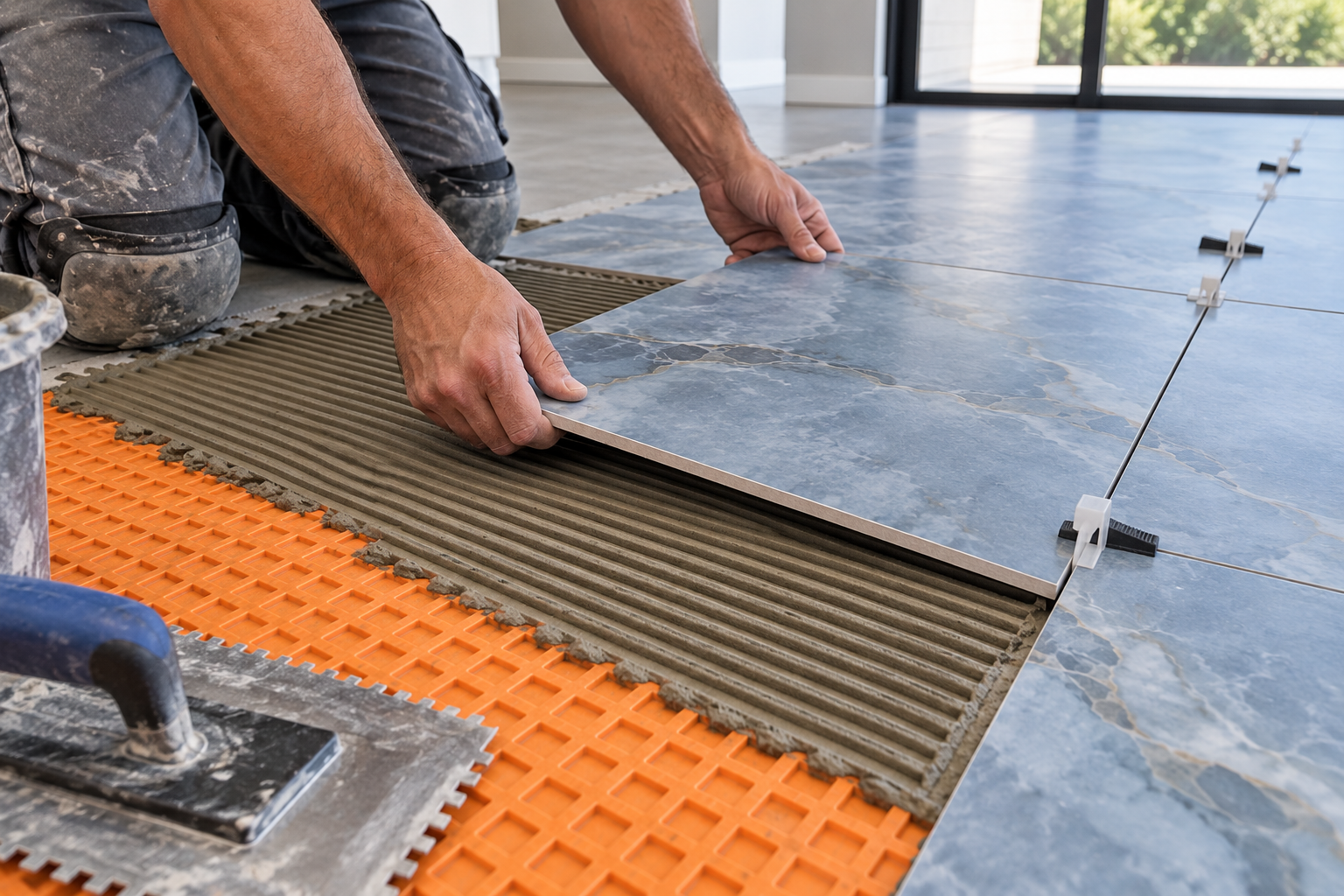
A stable, appropriately flat substrate is the single biggest factor in how a tile floor performs over time. Uneven areas lead to lippage at tile edges and stress on grout joints, so flatness gets corrected before any tile is set rather than worked around afterward.
Depending on the substrate and existing conditions, crack isolation membranes or uncoupling systems may be used to address minor substrate movement and reduce the chance of cracks transferring up into the finished tile.
Tile Layout, Grout Joints & Transitions
Layout is planned room by room — tile size and format influence grout-joint spacing, and joint spacing directly affects lippage control across the finished floor. Thresholds and transitions to wood, carpet, or other flooring get a clean, planned edge rather than an afterthought, and movement joints are placed where a large tiled area needs room to expand and contract without cracking. Grout selection and, where natural stone is used, sealing round out the finished result.
Replacing Existing Tile Flooring
Removing existing tile flooring exposes the subfloor underneath, which is then evaluated for flatness, stability, and any repairs needed before new tile goes down. This is also the point where a floor plan can shift — a room previously tiled in a small format might move to large-format porcelain, or a transition point between rooms might be reworked for a cleaner line. For bathroom-specific floor and wet-area considerations, see bathroom tile installation.
Replacing an old floor or starting fresh?
Call with the room and rough square footage — we’ll talk through material and layout options.
Large-Format Floor Tile
Large-format porcelain flooring requires a flatter substrate than smaller tile formats, since larger pieces are less forgiving of minor unevenness across the floor. Mortar coverage and trowel selection also become more critical because voids beneath large-format tile can increase the risk of cracking under load.
See large-format tile installation for a fuller look at what that preparation involves.
Floor Tile for Irvine Homes, Condos & Townhomes
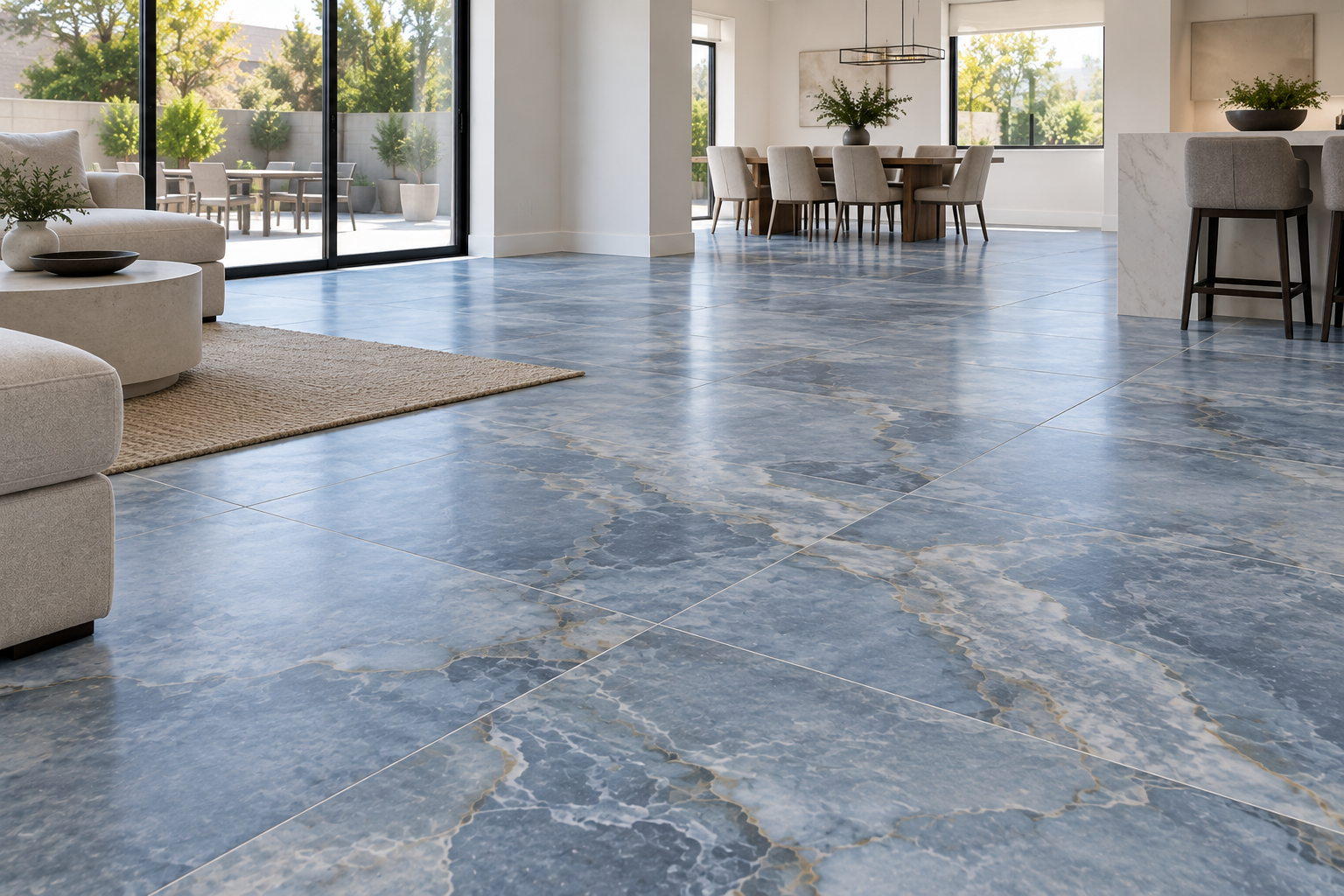
Irvine’s housing stock ranges from older tract homes with original flooring due for an update to condos and townhomes with more compact footprints, and newer construction where builder-grade tile is often the first thing homeowners want to replace. Installation follows recognized Tile Council of North America methods for substrate preparation and layout regardless of the home type.
What Affects Floor Tile Installation Cost
Floor pricing depends on square footage, removal of existing flooring, substrate condition and any correction needed, tile material and size, and layout complexity such as patterns or intricate transitions. Large-format tile and natural stone typically add cost over standard porcelain or ceramic due to their added preparation and handling requirements.
How Long Does Floor Tile Installation Take?
Timelines depend on square footage, whether existing flooring needs to be removed, substrate correction, tile format, and grout cure time. A small room moves faster than a whole-home flooring replacement, and any substrate repair adds time before tile setting can begin.
Our Floor Tile Installation Process
1. Review the Floor
Assess existing flooring, substrate condition, room dimensions, transitions, and tile selection.
2. Remove & Prepare
Remove existing flooring where needed, correct substrate issues, and prepare a stable, flat setting surface.
3. Plan Layout & Set Tile
Establish layout, grout-joint spacing, cut locations, transitions, and starting points before setting tile.
4. Grout, Finish & Clean
Grout appropriate joints, handle transitions and movement areas correctly, clean the finished floor, and complete final walkthrough.
Floor Tile Installation FAQs
How much does floor tile installation cost in Irvine?
Cost depends on square footage, removal of existing flooring, substrate condition, tile material and size, and layout complexity. See the Irvine tile installation cost guide for a fuller breakdown.
What tile is best for residential floors?
Porcelain is a common choice for its durability, ceramic works well in lower-traffic rooms, and natural stone offers a distinct look with added sealing requirements. Large-format porcelain is popular for a cleaner, more modern appearance.
Can you remove existing tile flooring?
Yes. Removal exposes the subfloor, which is then evaluated for flatness and stability before new tile is installed.
Does the floor need to be perfectly level before tile?
Not perfectly level, but it does need to be sufficiently flat and stable. Flatness within an appropriate tolerance is the key requirement, and any areas outside that tolerance are corrected before tile is set.
Can large-format tile be used on floors?
Yes, with additional attention to substrate flatness and mortar coverage. See large-format tile installation for what that involves.
How long does floor tile installation take?
Timeline depends on square footage, removal and substrate prep, tile format, and grout cure time. Smaller rooms move faster than whole-home installations.
Start Your Irvine Floor Tile Project
Call with your room and rough square footage, or send your project details and we’ll follow up with next steps.